12 Legal Ways to Get More Google Reviews
Updated on 25 August 2026
In short
- One principle covers all twelve: ask everyone, at the right moment, with no compensation and no filtering by satisfaction.
- A QR code on the check, at the moment of payment, is the most effective channel in restaurants.
- None of these methods require paid software to start.
- Realistic target for an independent restaurant: 10 to 20 new reviews a month, at a steady pace rather than in bursts.
- Offering a discount or gift for a review stays prohibited no matter how it's delivered.
The principle before the methods
Any collection method has to follow one rule: the customer chooses freely to leave a review, with no compensation tied to the action, and no gating based on satisfaction. What's allowed and what isn't is covered in our guide on what Google's review-gating rules actually prohibit.
With that framework set, here are the twelve methods, ranked from most to least effective in a restaurant setting.
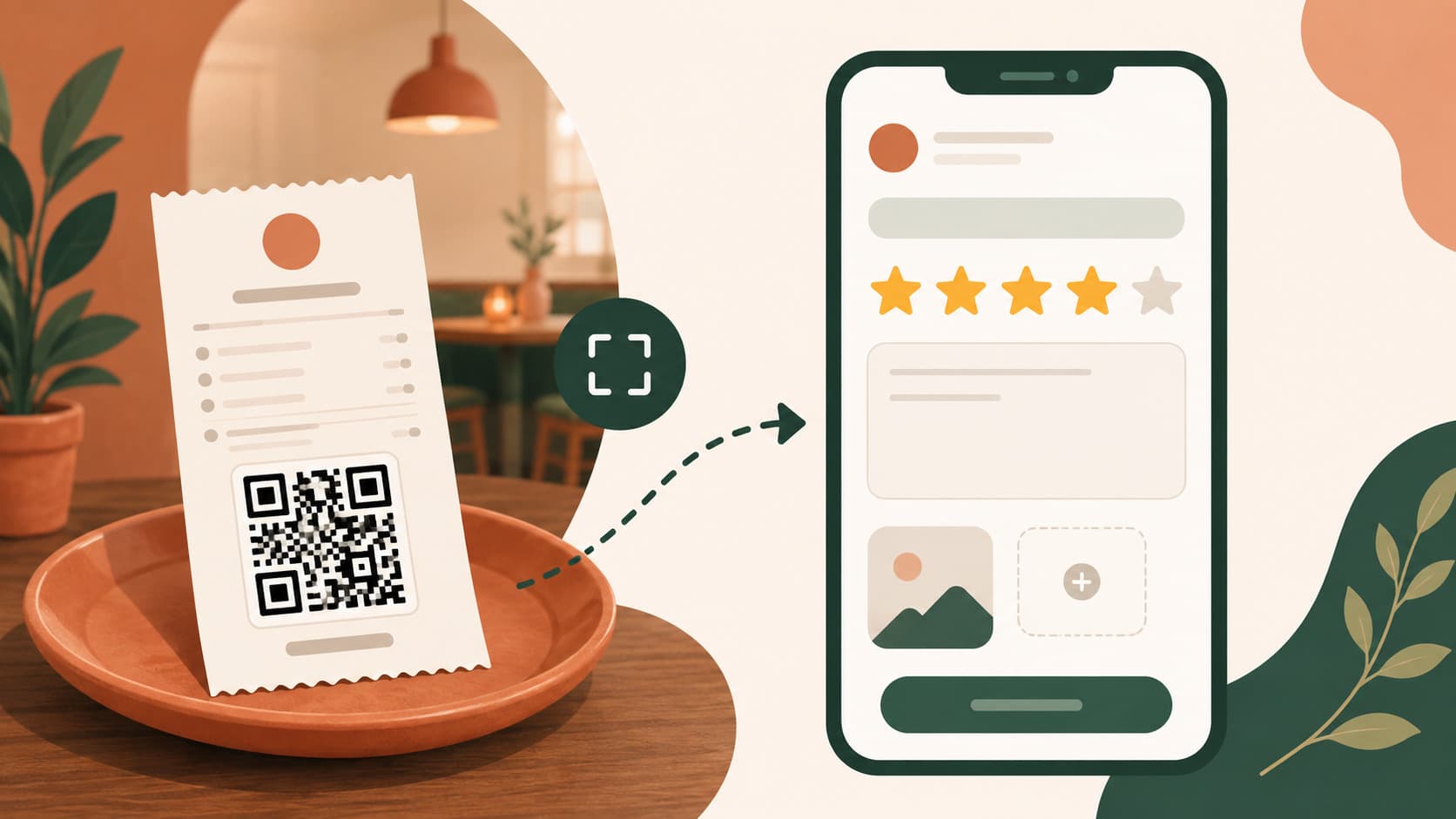
1. QR code on the check
The most effective channel. The customer is still seated, the experience is fresh, and paying naturally includes a pause where they check their phone.
Technical points to verify:
- The QR code should open the Google review form directly, not an intermediate page.
- Test it yourself on a phone not signed into your Google account — it's the only way to see exactly what the customer sees.
- Print it large enough: a tiny QR code on thermal paper doesn't scan well.
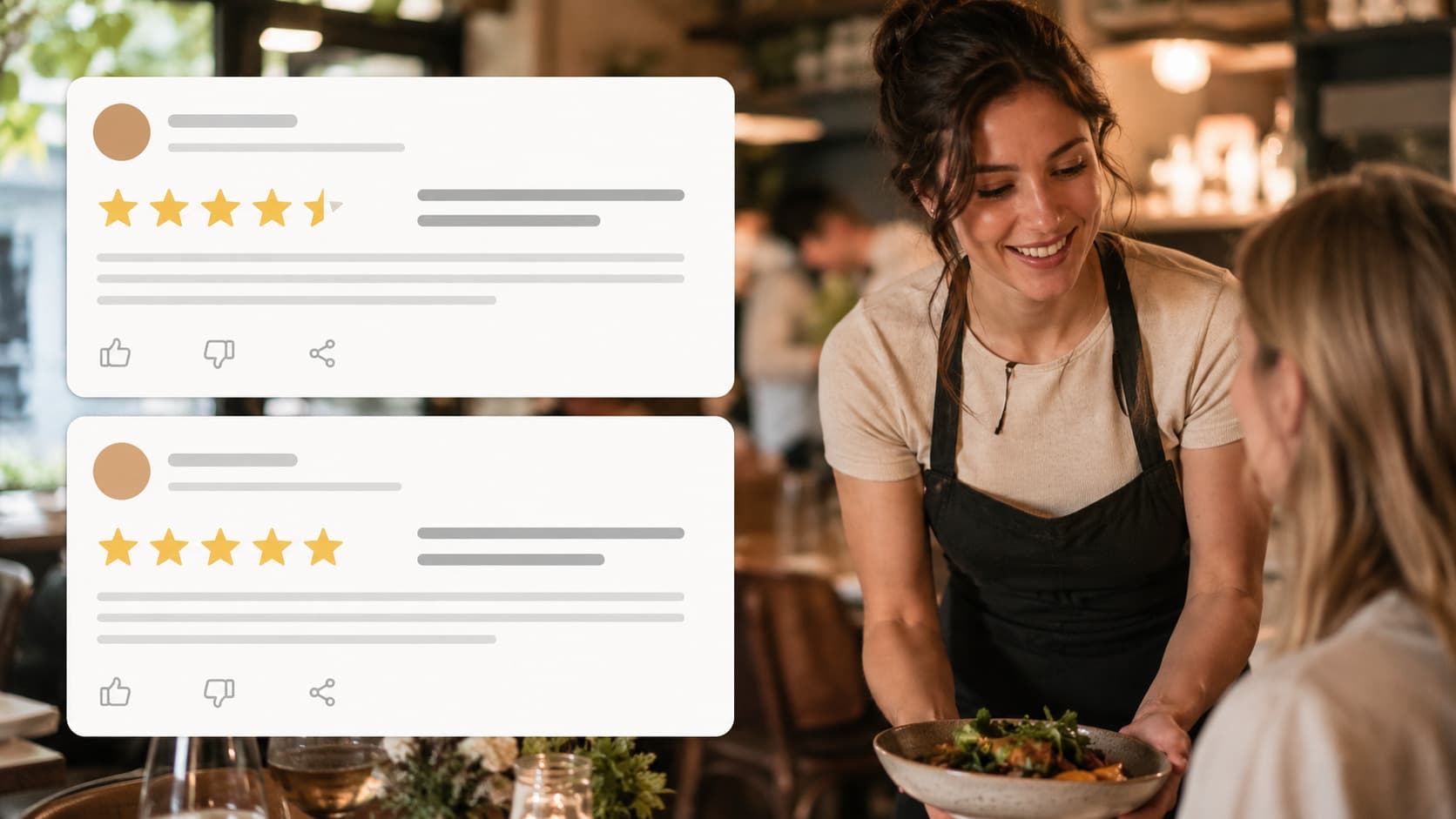
2. Verbal request from the server at the end of the meal
The highest conversion rate, but entirely dependent on staff consistency. Wording matters:
❌ "Could you leave us 5 stars on Google?" ✅ "If you enjoyed your meal, a Google review would really help us."
The first phrasing steers the rating requested, which counts as solicitation bias. The second stays neutral.
3. Table tent or NFC sticker
Low unit cost, passive and continuous effect. An NFC sticker (tap-to-open, no app needed) usually converts better than a standard QR code, since it skips the step of opening the camera.
4. Post-visit SMS
Sent 2 to 24 hours after the visit, to the number collected at booking or checkout. Solid response rate if the message is short and the link is direct.
Thanks for visiting [Name]! A Google review really helps us: [direct link]
5. Post-visit email
Less effective than SMS in restaurants (lower open rate), but free and easy to automate if you're already collecting emails through a loyalty program.
6. Link in email signature
Marginal but free and effortless once set up. Useful on booking confirmation or receipt emails.
7. Window sign
A "Google Reviews" sticker in the window, with a QR code, catches customers photographing the storefront or leaving after checking the posted menu.
8. Business card with a QR code
Slipped in with the check or handed at the host stand. Works particularly well for one-time or tourist customers, who don't always think to look the business up on Google afterward.
9. Follow-up through a loyalty program
If you run a loyalty card or app, an occasional notification (not systematic) after a certain number of visits reaches regulars — often under-represented in reviews despite being your best advocates.
10. Mention at the end of online bookings
On the confirmation page of a third-party booking platform, a discreet message inviting a review after the visit — not before.
11. Social media
An occasional post reminding followers your Google listing exists, without overdoing frequency. Mostly effective as a reminder to regulars who already follow you that their review matters.
12. Staff training
The most underrated method. A team that understands why reviews matter (not just "the owner asked us to") mentions them more naturally and more consistently than one following a mechanical script.
What stays prohibited, regardless of method
| Practice | Status |
|---|---|
| Offering a discount, dish, or drink for a review | ❌ Prohibited |
| Only asking customers who look satisfied | ❌ Prohibited (review gating) |
| Asking employees to leave reviews | ❌ Prohibited |
| Phrasing the request to steer toward 5 stars | ❌ Solicitation bias |
| Using a third-party service that generates fake reviews | ❌ Prohibited, automated detection |
How long until you see an effect?
With a steady collection rhythm (methods 1, 2, and 4 combined), a restaurant getting 2–3 reviews a month can reach 15–20 monthly reviews within four to six weeks. The effect on local ranking follows with a lag: expect 2–6 additional weeks to see movement in the Local Pack, per industry analysis.
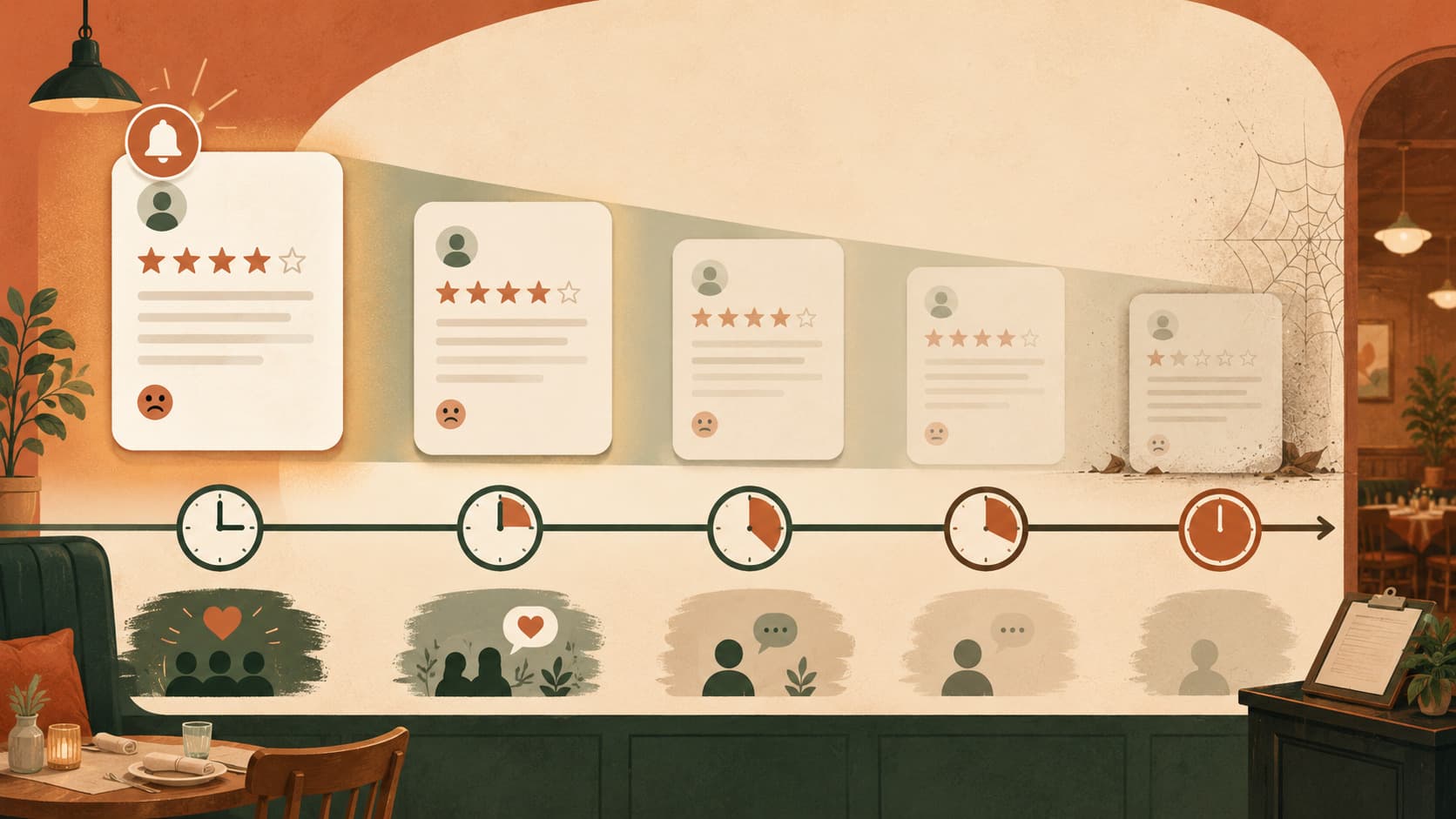
Steady pace matters more than bursts: ten reviews a month for six months beats sixty reviews in one week followed by silence, which can trigger automated review from Google.
For managing reviews once collected, see the complete guide to Google reviews for restaurants. For QR code specifics, see Google review QR codes: guide and templates.
SEOresto automates SMS and QR code follow-ups and tracks your progress toward your local market's target. From €39/month. See pricing.
Sources: Google's official review policies.
Author: Dmitrii Portnov, founder of SEOresto.