Semantic Review Analysis: Turning Complaints into Actions
Updated on 27 August 2026
In short
- Your reviews contain free operational data that most restaurant owners only ever read as isolated star ratings.
- A 5-theme categorization — quality, service, price, atmosphere, cleanliness — is enough to spot trends without complex tooling.
- A theme that recurs in more than 3 negative reviews over a quarter signals a structural issue, not an isolated incident.
- The manual method holds up to about 20–30 reviews a month; beyond that, a spreadsheet or dedicated tool becomes necessary.
- The goal isn't to respond to every review individually — it's to catch the pattern before it costs more customers.
Why a rating alone tells you almost nothing
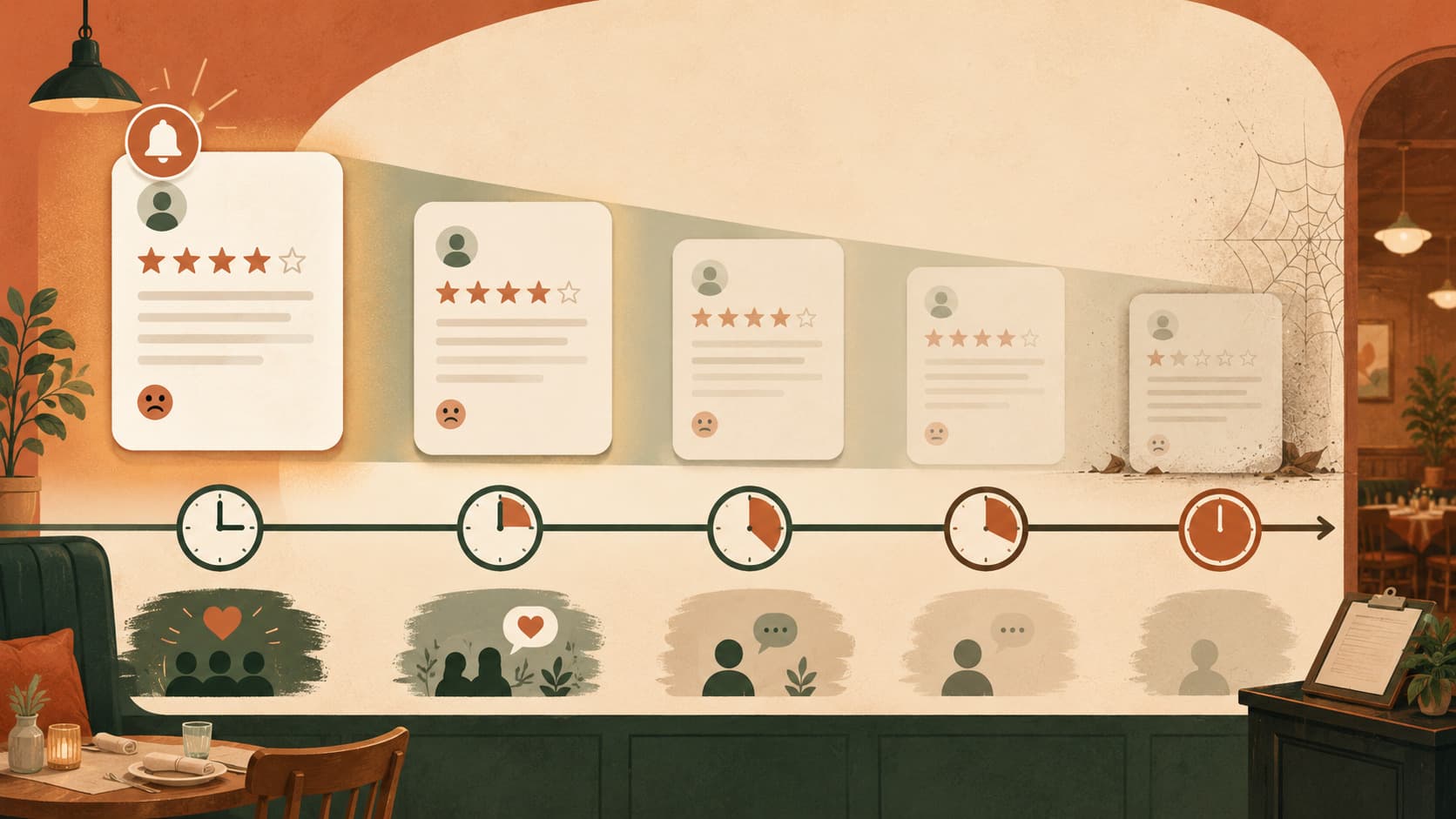
A 4.3-star average tells no operational story. It can hide a service problem that's been worsening for two months, offset by a kitchen that's still excellent enough to keep the average afloat. Without reading review content, that signal stays invisible until it's large enough to drag the overall rating down — which is too late to act on it quietly.
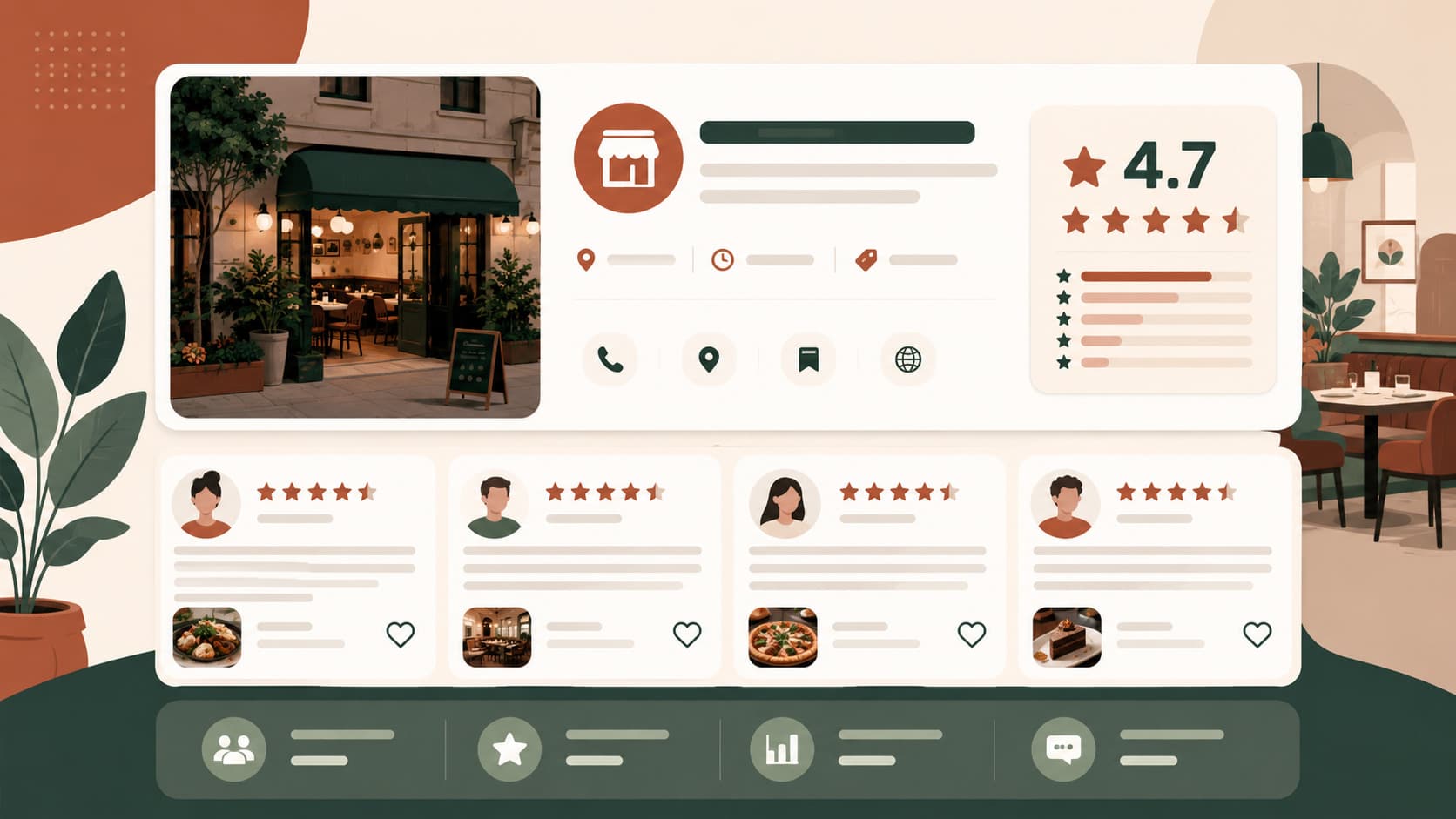
Semantic analysis is simply about sorting review content by theme, turning a stream of text into an operational dashboard.
The 5-category method
Five themes cover most of what restaurant feedback boils down to:
| Theme | What it covers |
|---|---|
| Quality | The dish itself: taste, cooking, freshness, presentation |
| Service | Wait times, staff attitude, order mistakes |
| Price | Perceived value for money, portion sizes |
| Atmosphere | Noise, decor, visible cleanliness, comfort |
| Cleanliness | Actual cleanliness (visible kitchen, restrooms, table) |
For each review, note mentally (or in a spreadsheet) which theme dominates, and whether it's positive or negative. A single review can span several themes — that's normal, tag all of them.
How to spot a real problem
One isolated review isn't a pattern. Three reviews on the same negative theme within a month, out of a volume of 15–20 reviews, starts becoming meaningful. The threshold depends on your total volume:
| Monthly review volume | Alert threshold for a theme |
|---|---|
| 10–15 reviews | 2 negative mentions of the same theme |
| 20–30 reviews | 3–4 negative mentions |
| 40+ reviews | Track percentage rather than raw count |
The goal isn't to react to every individual complaint, but to spot the pattern that repeats — that's the only thing that justifies an operational fix, not just a polite reply.
A concrete example
Over a quarter, a restaurant gets 45 reviews. Manual categorization shows:
- Quality: 38 positive mentions, 2 negative
- Service: 22 positive mentions, 9 negative, 6 of which cite wait time
- Price: 12 mentions, balanced
- Atmosphere: 15 positive mentions
- Cleanliness: zero negative mentions
The signal is clear: this isn't a kitchen problem, it's a service-time problem, concentrated on one specific point. The fix isn't "improve service in general" — it's investigating why the wait keeps coming up: understaffing at certain shifts, floor organization, or a kitchen bottleneck at particular hours.
That's the difference between reading reviews as compliments or complaints, and reading them as diagnostic data.
How far does the manual method hold up?
For a location receiving up to 20–30 reviews a month, a simple spreadsheet (one row per review, one column per theme, a yes/no for positive/negative) is more than enough and takes about 20 minutes a month to maintain.
Beyond that, or across multiple locations, manual categorization becomes time-consuming and prone to gaps — especially for spotting trends that unfold over several months rather than one.
SEOresto automatically categorizes every review across these five themes and shows month-over-month trends, with a drill-down into each category to read the underlying reviews directly. From €39/month. See pricing.
For the response method once you've identified the pattern, see responding to a negative review: the 5-step method. For the full subject, see the complete guide to Google reviews.
Author: Dmitrii Portnov, founder of SEOresto.